
Nantucket
Nantucket
Nantucket
Itineraries & Recommendations
One Happy Island
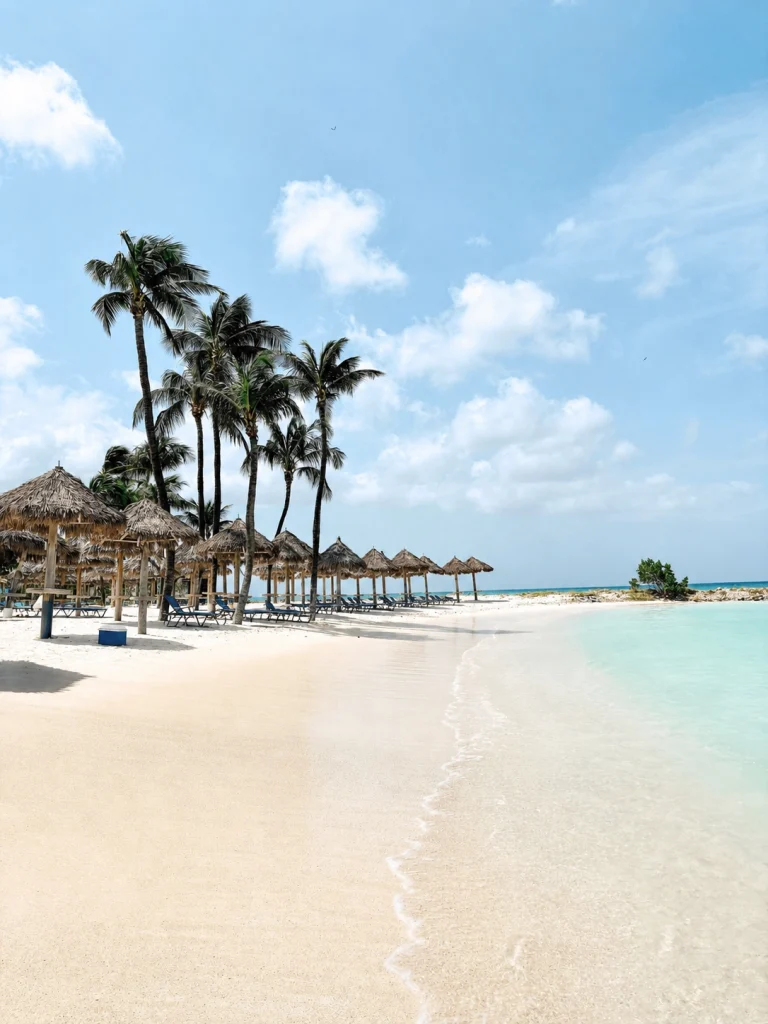
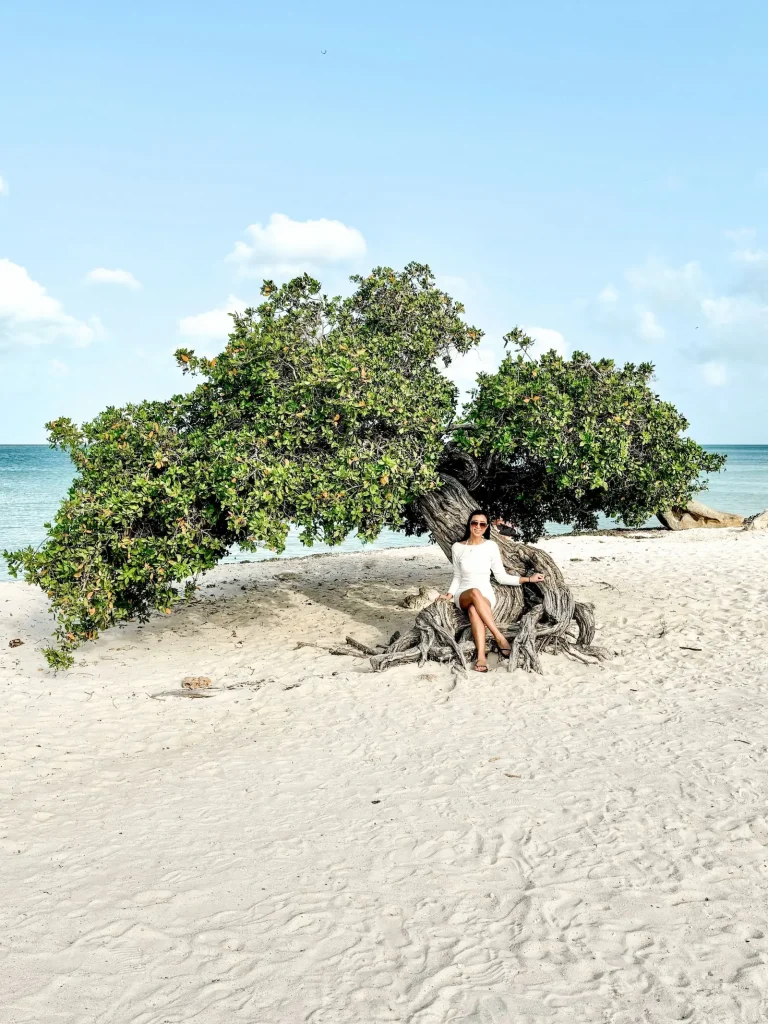
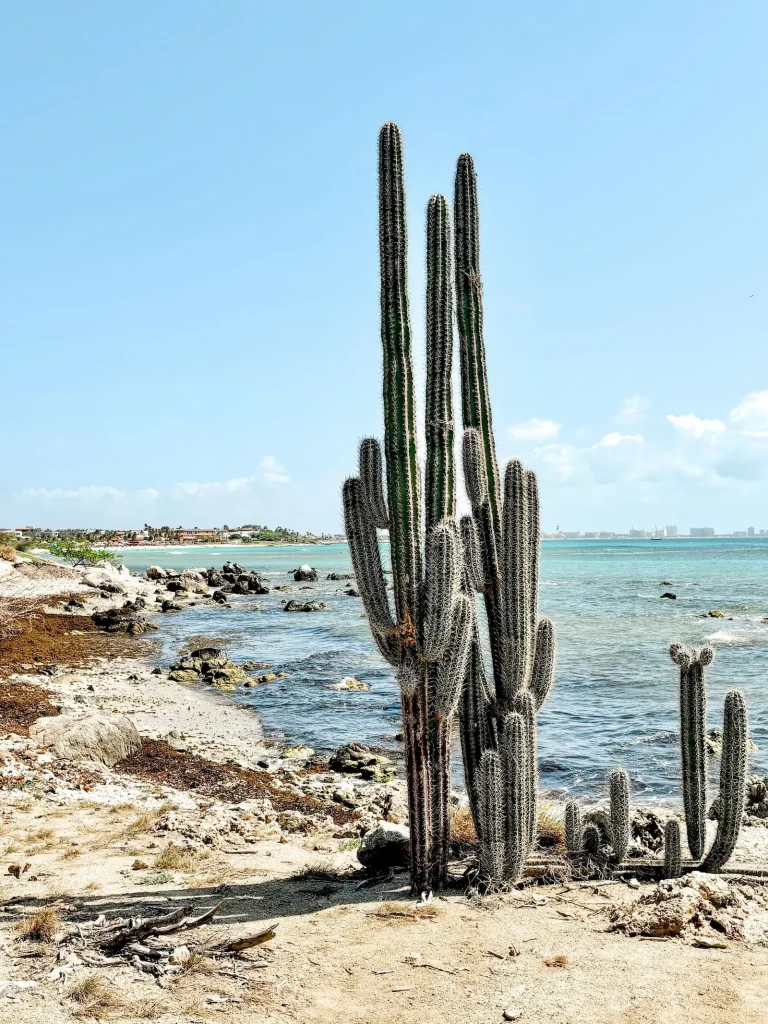
Where powder-soft beaches stretch into serene turquoise horizons and days unfold in effortless, sun-soaked ease. In the southern Caribbean, just off the coast of Venezuela, lies Aruba, part of the ABC Islands alongside Bonaire and Curaçao. These Dutch-influenced islands share a multilingual culture and an arid landscape shaped by steady winds that bend iconic divi-divi and fofoti trees southwest. Positioned outside the hurricane belt, the island enjoys a consistent climate— clear sunny skies feel less like chance and more like certainty.
Chase adrenaline across open water and desert terrain, from high-speed water sports to 4x4 expeditions, then unwind with waterfront dinners and golden-hour moments. Local dishes include keshi yena, in a golden cheese shell; pastechi, crisp savory pastries; funchi, a cornmeal staple; and abundant Caribbean seafood.
But that's just the beginning. What comes next makes it worth the trip. Below are recommendations to help you plan your own unforgettable adventure.
Compass set. Aruba awaits.
Curated Itineraries
Coming soon…
The Signature Edit
• 3 Days •
Iconic Highlights & Essential Places
Into the Wild
• 5 Days •
Where Wellness Meets Adventure
The Grand Tour
• 7 Days •
The Complete Island Experience
Signature Experiences
Animal Experiences
-
Turtle Nesting and Hatching Season:
Observe endangered turtles as they lay their eggs (March–September) and watch baby turtles make their way to the sea (May–November)— a truly magical sight. The best spots are Eagle Beach, Arashi Beach, Palm Beach, Druif Beach, and Baby Beach, with Eagle Beach being the most famous. Local conservation groups monitor nests and protect hatchlings, marking sites with protective barriers. Remember to observe from a distance, respect barricades, and avoid flash photography at night as bright lights can disorient the turtles. no hours • FREE • multiple regions
-
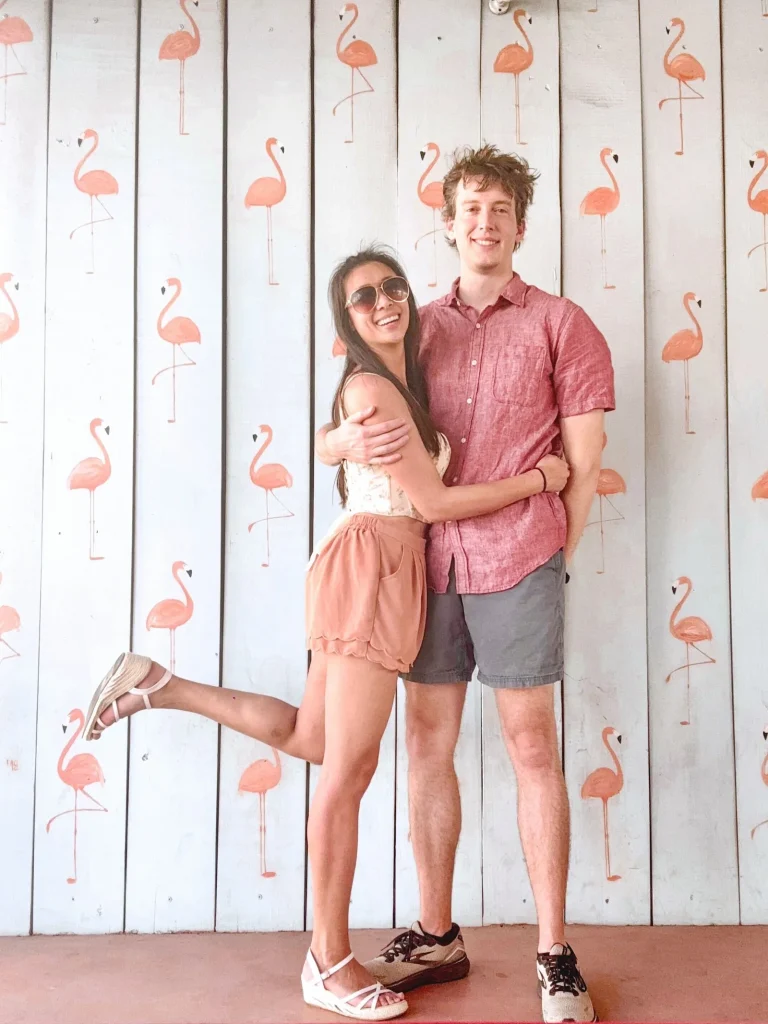
Flamingo Encounters on Renaissance Island:
A private island that offers a relaxed, luxurious, beach resort experience through flamingo feeding, loungers, hammocks, cabanas. Known as Flamingo Beach. Must reserve in advance! A limited number of day passes become available at 9AM on Sat for the following week and include water taxi transportation, lounge chairs, snorkel gear. Cabanas, food and drinks cost extra. daily 7AM-7PM • $130 + tax (2026 rate), free for hotel guests of the Renaissance Wind Creek Aruba Resort • offshore Oranjestad
-
Flamingo Encounters on De Palm Island:
An all-inclusive activity island where flamingos have a designated section rather than roam freely. Must reserve in advance! Day pass includes ferry transportation, open bar and lunch buffet, and activities such as snorkeling, small water park with water slides, banana boat rides, salsa lessons. Note there is an upgrade that you must purchase to get closer to the flamingos. daily 10AM-5PM • $99 walk-in, $129 with bus transportation (2026 rate) • Balashi
*wildlife considerations: Travelers who prioritize animal welfare may wish to research the property’s current animal care practices to determine whether the experience aligns with their own values. Flamingos are not native to Aruba and were brought to the island in the 1950s to create a unique attraction for tourists. While some visitors question practices like wing clipping and hand feeding, others note that the birds are not used in performances and live in a protected habitat with controlled diets and veterinary care.
*alternatives:
1) flamingos prefer large salt flats and protected lagoons for nesting like on nearby islands Bonaire Curaçao, where they are wild and protected
Nature Landmarks
-
Natural Bridge:
Once the largest natural bridge in the Caribbean stretching ~30m (98ft) long and 7.6m (25ft) high. Unfortunately the original limestone bridge partially collapsed in 2005, but the site remains a popular natural landmark.
-
Ayo Rock Formations:
A cluster of stacked boulders formed millions of years ago when molten rock cooled beneath the earth's surface and later pushed upward. The site was once considered sacred by the Caquetío people, so you can also find petroglyphs here.
-
Casibari Rock Formations:
Giant granite boulders with staircases to viewpoints at the top.
-
Hooiberg Mountain:
Giant granite boulders with staircases to viewpoints at the top. 21 Hooiberg Mountain: A volcanic hill formed millions of years ago from solidified magma shaped like a cone, which inspired its name, which is Dutch for "haystack". Climb the 587 steps to the summit ~165m (541ft) above sea level for panoramic views and even see the coast of Venezuela in the distance. Visit early morning or late afternoon to avoid the midday heat.
San Nicholas
-
San Nicholas:
The second largest town in the country, once a oil refinery town in the early–mid 20th century, is now a vibrant hub known for its colorful street art and murals, creative scene, and relaxed local atmosphere.
-
Baby Beach:
A crescent-shaped lagoon originally created to allow tankers to dock. Its calm protected waters is perfect for families with kids to swim and snorkel.
Adventure & Thrills
Wellness Escapes
Festivals and Cultural Events
Aruba Carnival (January–February):
The island’s biggest cultural celebration, featuring street parades, live music, colorful costumes, and nonstop party energy. The main events—like the Grand Carnival Parade—wind through the streets of Oranjestad (especially along L.G. Smith Boulevard) and San Nicolas, where locals and visitors alike dance to soca, calypso, and tumba music amid dazzling floats and performances.
Aruba Hi‑Winds (May):
A world‑class windsurfing, kitesurfing, and foiling festival that draws top athletes and water‑sports fans from around the globe. Held annually in May at Sarah‑Quita Beach in Noord (near Fisherman’s Huts), this five‑day event features thrilling races, freestyle action, and fun spectator experiences against the backdrop of Aruba’s steady trade winds and turquoise Caribbean water.
Dera Gai Festival (June):
A traditional Aruban harvest celebration with music, dancing, and community gatherings rooted in local folklore. Festivities are hosted in various parts of the island, including San Nicolas, Santa Cruz, and Noord, where colorful costumes, traditional songs, and dance bring Aruban cultural heritage to life each summer.
Queen Wilhelmina Park:
A small waterfront city park in downtown Oranjestad featuring walking paths, a few sculptures, and the I heart Aruba sign.
Visitor Information
no hours • FREE • Oranjestad
Compass Points
a nice green space to walk through, but smaller than expected and there isn’t much to see or do
*alternatives:
1) Linear Park offers a longer walking route
2) Arikok National Park contains hiking trails and is the largest protected natural area on the island
Bubali Bird Sanctuary:
20 hectares (49 acres) of protected wetland that provides habitat for herons, egrets, ducks, skimmers, and other bird species.
Visitor Information
no hours • FREE • Noord
Compass Points
a peaceful spot for avid birdwatchers, but not one I’d recommend for most visitors as public access is limited to a short path and one observation tower, making sightings more limited; we visited at 8AM and only saw a few birds at the pond— binoculars may help
*alternatives:
1) Everglades National Park in Florida, USA offers more abundant and reliable bird sightings in a large wetland
2) Pantanal in Brazil is one of the world’s best birding regions known for high species density and consistent wildlife viewing
Bushiribana Ruins:
Stone remnants of the Bushiribana Gold Mill, which processed 3 million pounds of gold and operated until 1916 before being abandoned due to declining yields.
Visitor Information
no hours • FREE • Paradera
Compass Points
historically interesting, but underwhelming due to its small scale and no signage or educational material on-site; more of a quick photo stop if you are already passing by, but otherwise not worth the trek
*alternatives:
1) Bodie State Historic Park in California, USA is a well-preserved gold rush ghost town with mills used to process gold ore and dozens of intact buildings and exhibits
Donkey Sanctuary:
A nonprofit organization that rescues and cares for abandoned or injured donkeys while also educating visitors about their role in Aruba’s history and allows feedings with approved treats.
Visitor Information
daily 9AM-4PM • FREE • Santa Cruz
Compass Points
a meaningful stop, but nothing special; better if you’re traveling with children, have a strong interest in animals, or have never seen donkeys up close before
*alternatives:
1) Donkey Sanctuary Bonaire is similar, but offers a larger, more natural roaming environment with less restricted space for the animals
The Butterfly Farm:
A guided tropical greenhouse where visitors learn about the butterfly life cycle.
Visitor Information
daily 8:30AM-4:30PM • $19 (2026 rate) • Noord
Compass Points
not worth the price in my opinion as the space is small and educational content is fairly elementary
*wildlife considerations: butterflies are kept in close quarters, which may raise concerns for increased stress and disease risk— a tourist-focused exhibit, rather than a wild habitat
*alternatives:
1) nature walks or guided eco-tours observe native nature without enclosure; we spotted butterflies just while walking around
Ostrich Farm:
A guided farm experience where visitors can observe and feed large birds such as ostriches and emus under staff supervision in a managed enclosure.
Visitor Information
daily 10AM-3PM • $17 (2026 rate) • Paradera
Compass Points
- common visitor feedback suggests the experience is tourism-focused with a brief educational component, feels more staged rather than an immersive natural wildlife experience
*wildlife considerations: Travelers who prioritize animal welfare may wish to research the farm’s current animal care practices to determine whether the experience aligns with their own values. While the farm states that the birds are not raised for meat or leather, and that eggs served in the restaurant are surplus or infertile, the experience is structured around feeding, and some visitors report lack of transparency about animal care.
*alternatives:
1) observe ostriches in the wild on an African safari
2) Alpine Acres Sanctuary Farm in California, USA cares for rescued ostriches and emus where they focus on rescue, rehabilitation, and education with no forced interaction
Culinary Highlights
Fisherman's Hut
catch of the day
mahi mahi
pineapple curry shrimp
avocado shrimp app
insider info:
*fresh catch the night we went was barracuda and grouper
*bongo player started at 8PM
*desserts topped with cake sparkler for special occasions
*directly on the main strip but wasn’t as noisy as other places we ate at and walked by, which was nice
Palm Beach
Caribbean | Aruban | Seafood
★ ★ ★ ★ ⯪
Eduardo's Beach Shack
açaí bowls
smoothies
insider info:
*the salmon in the salmon poke bowl is cooked; I personally would stick to the smoothies, acai bowls, and fresh fruit
Palm Beach
Healthy | Açai bowls | Smoothies




$
★ ★ ★ ★ ⯪
Bodegas Papiamento
lobster roll
tuna poke bowl
insider info:
*award-winning rum portfolio
*happy hour wed-thu 5-7PM: 2‑for‑1 cocktails, free first drink (often their signature Sugar Cane cocktail made with Carnival Rum)
*one veg option: a portobello burger
Oranjestad
International Fusion | Distillery
★ ★ ★ ★ ⯪
MooMba Beach Bar & Restaurant
pinchos
grouper
fetticcine carbonara
frozen drinks
insider info:
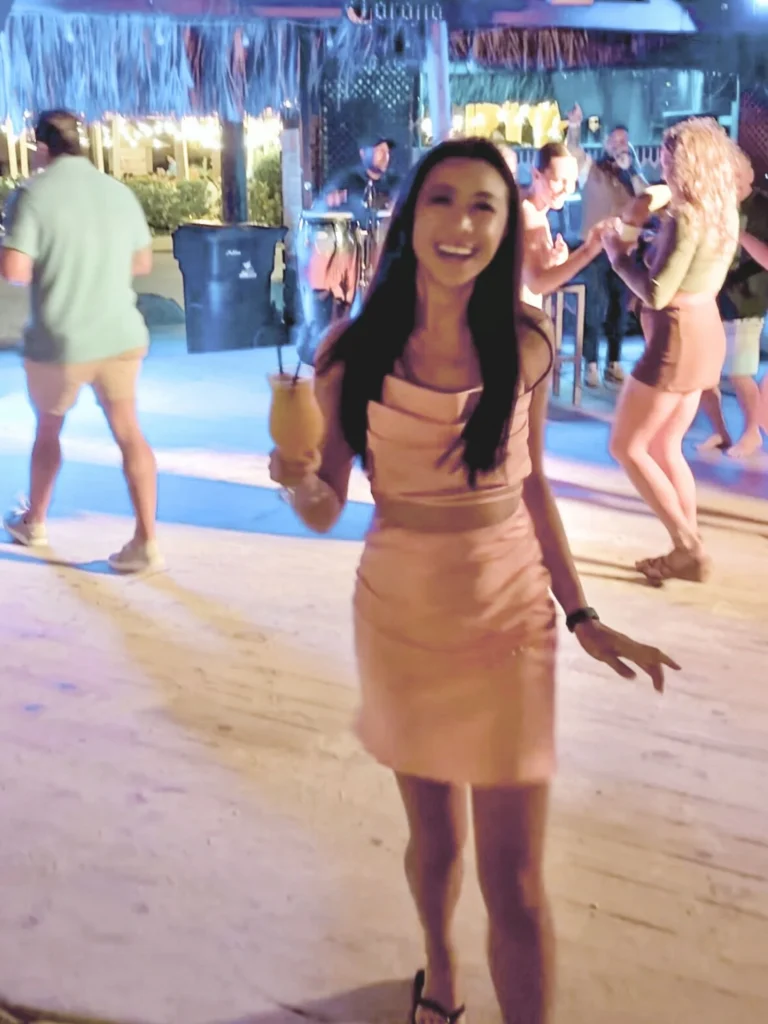
*8PM live music; felt like a wedding reception at times with their song choices and people hitting up the dance floor
*the sunday night party was lit - the 10/10:30PM DJ played bad bunny, kendrick lamar, rhianna, usher, keeping the dance floor full most of the night and girls danced on the bar, mostly a 20s-early 30s crowd but there were people of all ages
*veg options: fried cheese, veg fajitas, veg penne pasta
Palm Beach
Caribbean | American
$$
★ ★ ★ ★ ⯪
Elements Restaurant
mahi mahi crab cakes
french onion soup
insider info:
*sunday brunch specials
*four beach palapas/cabanas offer a private romantic 6 course meal (two times available, ~6pm for sunset or ~8:30pm for dinner under the stars) - I only looked the week prior and they were all already reserved so book more in advance
*one of the best places for vegan food on the island as there is a whole dedicated section on the menu (though I did not like the tofu sashimi)
*gluten-free pasta upon request, other options well labeled
Eagle Beach
Caribbean | Fine Dining
• Adults-Only •
$$-$$$
★ ★ ★ ★ ☆
Passions on the Beach
coconut grouper
mahi mahi
insider info:
*8PM dinner under the stars 3 course meal package for $56pp
*complimentary glass champagne on entry
*table and chairs in the sand, so people may walk by as it is a public beach
*sewage-like odor was more prominent at the entrance, but did not detract from our experience
*lots of vegan and gluten-free options well labeled
Eagle Beach
Caribbean | Seafood | Fine Dining
$$-$$$
★ ★ ★ ★ ☆
Mythos Greek Frozen Yogurt
honey and baklava
insider info:
*when I chose the baklava and honey topings the staff said that was the best combo and it was good!
*a prior customer claimed that it tasted sour, but if you know what greek yogurt tastes like you’d know that it is different from traditional frozen yogurt and gelato
Palm Beach
Ice Cream
★ ★ ★ ★ ☆
Lola Taqueria
korean chicken tacos
insider info:
*directly on the main street, expect loud music and street noise
*vegan: guac, tofu taco, seitan taco, brussel sprout taco, power bowl, acai bowl
*veg: vegan items plus cheese quesadilla
*gluten-free: ceviche, and their fresh homemade taco tortillas are made of corn
Palm Beach
Mexican
$$
★ ★ ★ ☆ ☆
Honorable Mentions
- Bugaloe: bar, Caribbean, American
- CAYA House: Caribbean Latin fusion
- Flying Fishbone: Seafood
- Garden Fresh: healthy, cafe
- Gianni’s Ristorante Italiano: Italian
- The Kitchen Table: Caribbean fusion
- The Pastechi House: Aruban
- The Vue Rooftop: bar, international fusion
Featured Stays
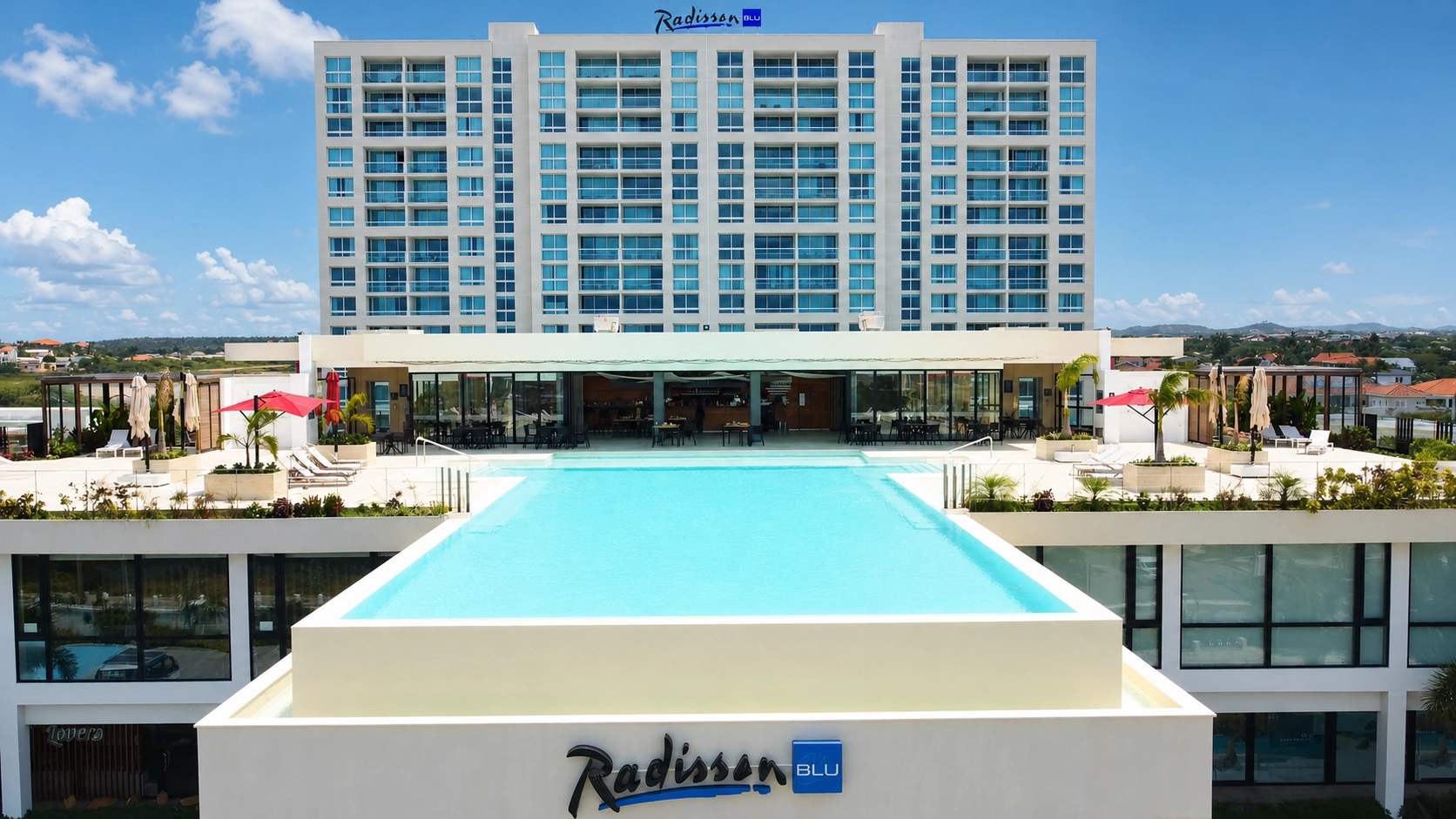
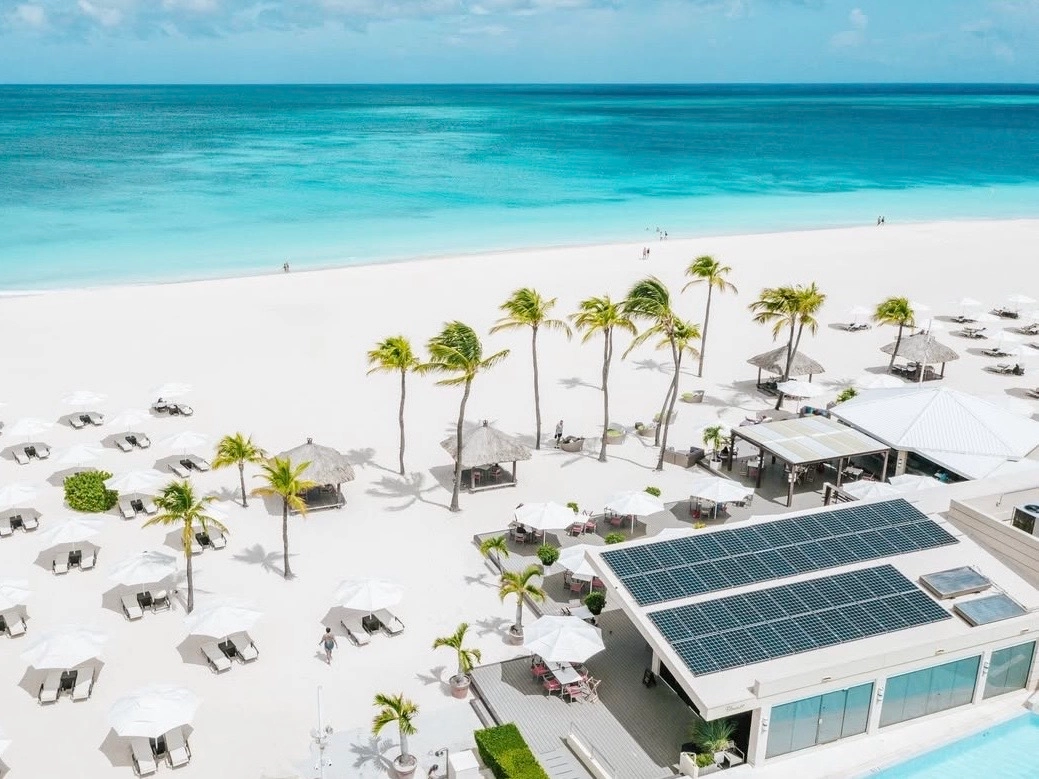
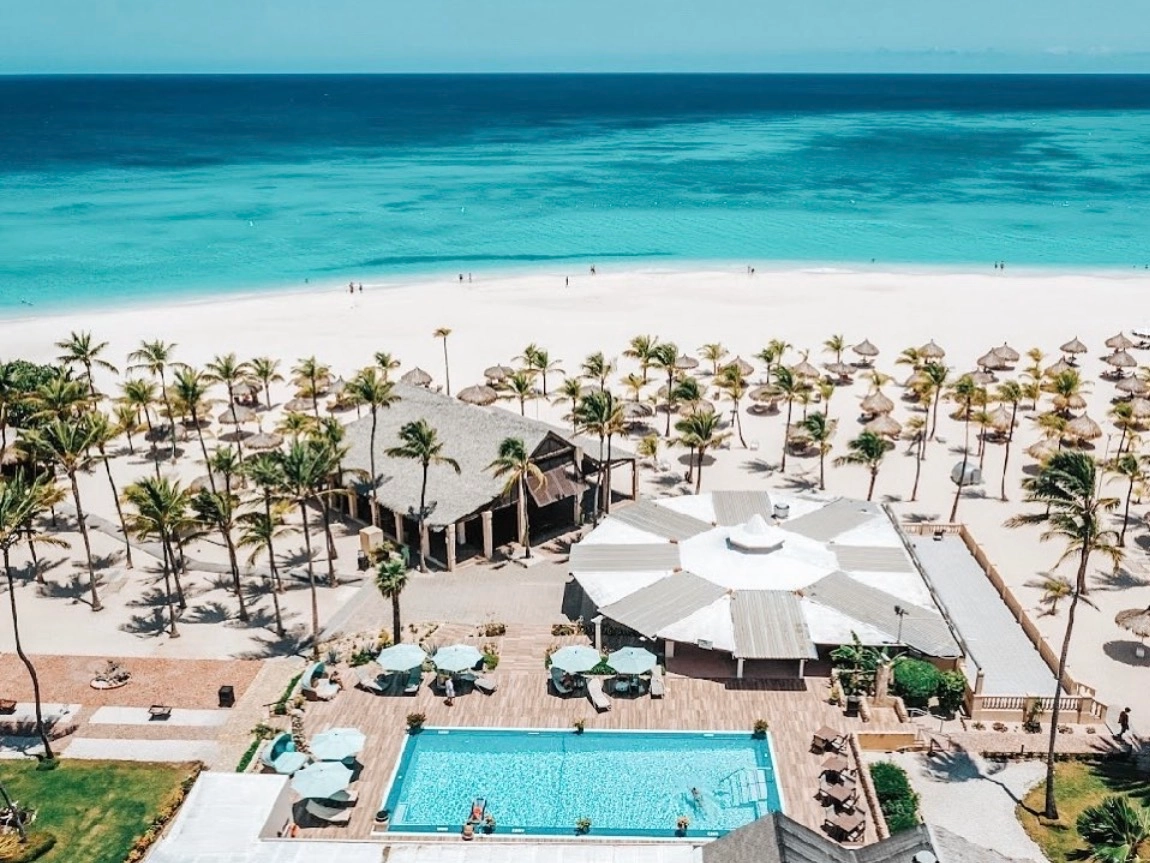
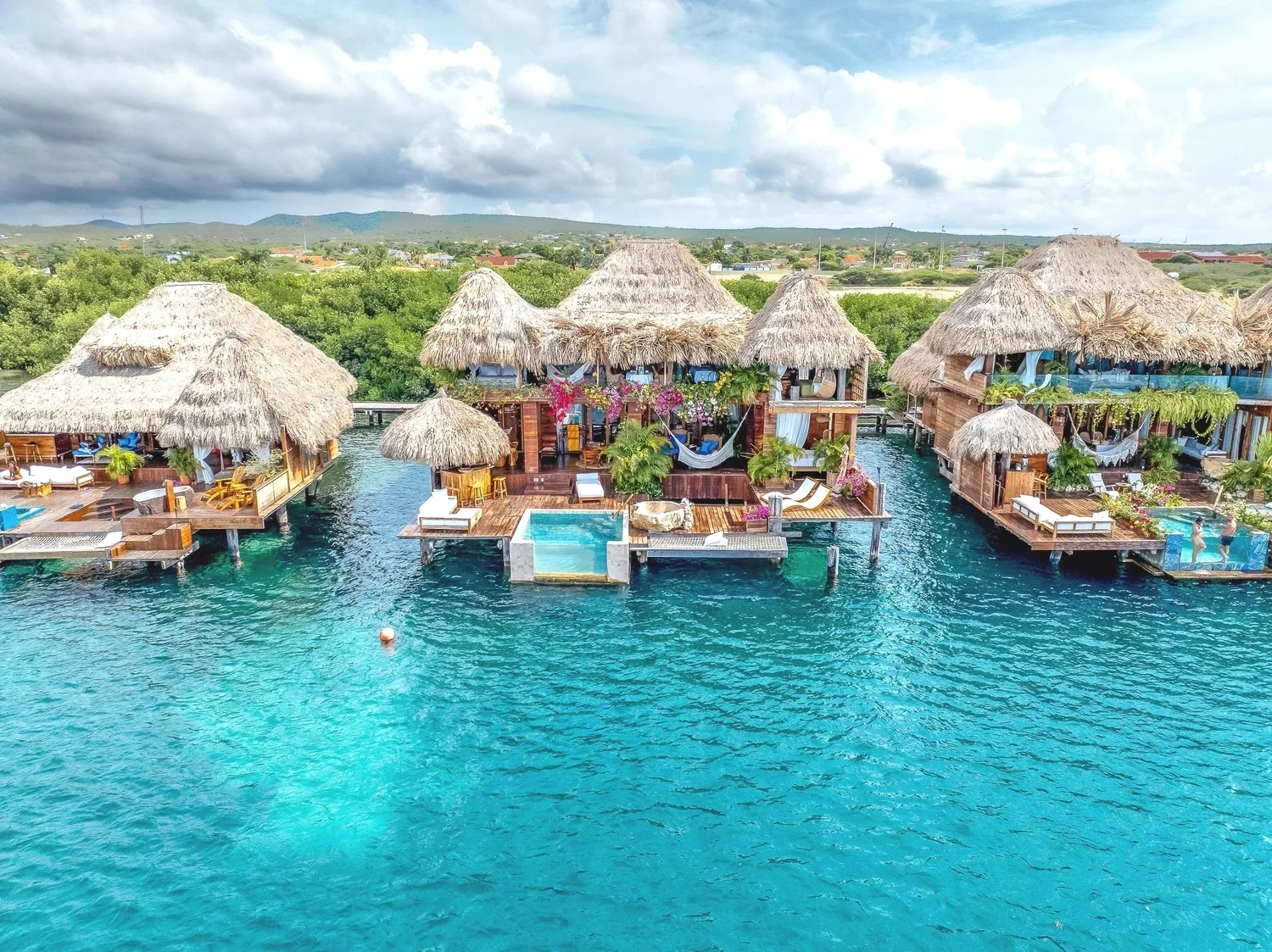
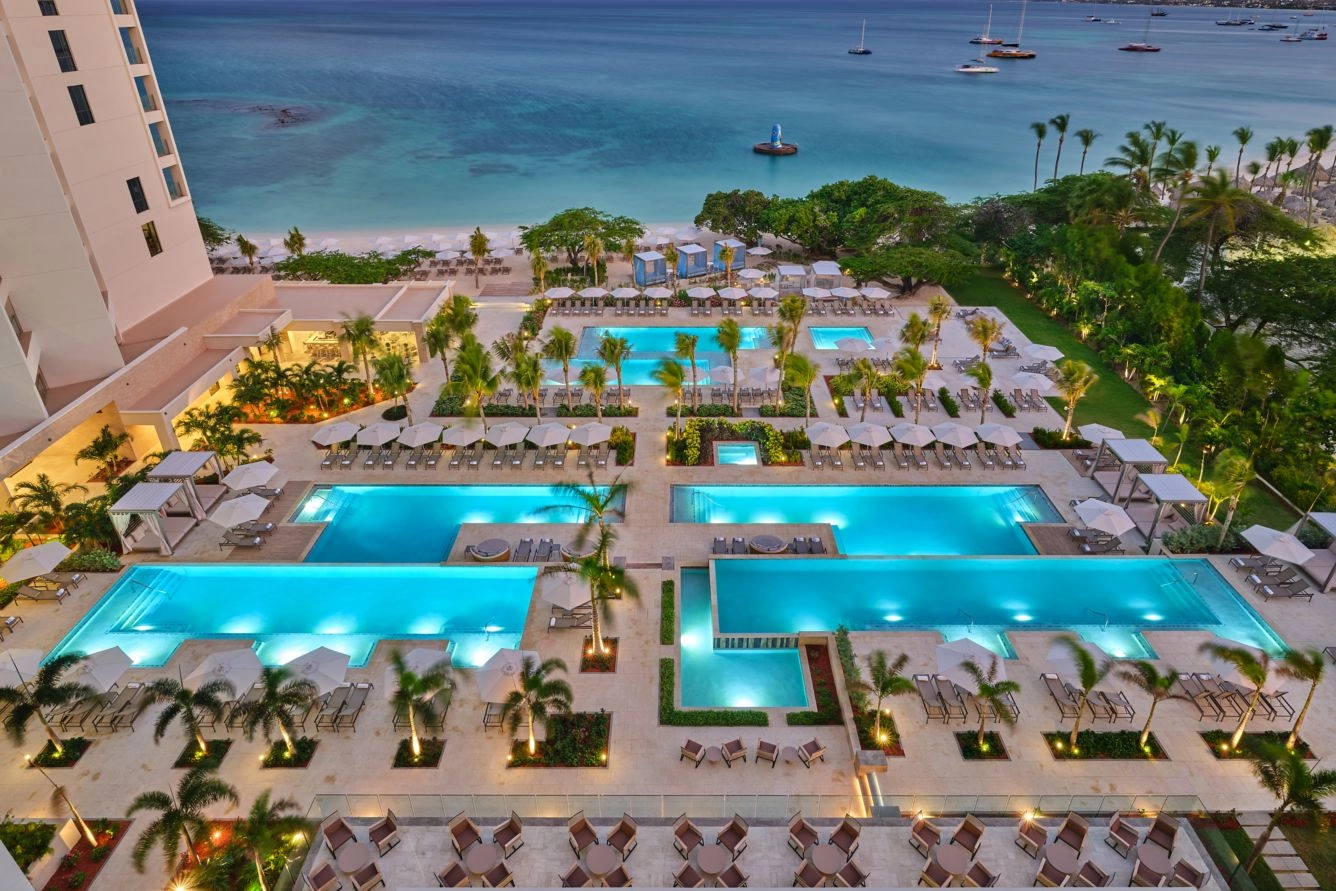
If you’re looking for convenience, dining, and plenty of activity, the best areas to stay in Aruba are Palm Beach and Eagle Beach. Both locations put you right on Aruba’s stunning coastline, making them ideal for easy beach access and unforgettable sunset views.
Travel Essentials
- Local Basics
- Currency
- Transportation
- Phone Apps
- Travel Docs
- Packing List
Location, Time Zone, Weather
- ABC Islands in the southern Caribbean
- atlantic standard time (AST)
- does not observe daylight savings
- dry tropical climate, windy
- ave temp: 27-32°C (80–90°F)
- outside the hurricane belt
- electrical outlet types: A, B
- peak travel season: Dec-Apr
Local Languages, Cultural Etiquette
- official languages: Dutch, Papiamento
- english and spanish also widely spoken
- dress code: casual resort wear, beachwear
- coverups when entering shops/ restaurants
- tap water is safe to drink
Money & Payments
- official currency: Aruban Florin (AWG)
- USD widely accepted
- credit card widely accepted (only times we used cash was for the local bus and service tips)
- tipping 10-15% is customary
- exchange rate fixed, 1 USD = ~1.79 AWG
Public Transportation
*easy to get around via taxi, bus, scooter; 4×4 tour, car recommended to reach remote sites
- public bus: Arubus ($2.60/ride 2026 rate)
- the Arubus website helped locate bus stops and time schedules
- L7 / L7A: Oranjestad → Marriott at Palm Beach
- L10 / L10A: Oranjestad → Palm Beach → Arashi
- taxi (no uber or lift) *most cash only (USD or AWD)
- electric bikes and scooters
- resort areas are very walkable
Getting to / from the Airport
*taxi to/from the airport to our hotel in Palm Beach was $35 (2026 rate)
- Queen Beatrix International Airport (AUA)
- taxi line right outside airport doors (fastest)
- Arubus
- rental car
Aside from widely used apps like Google Maps and WhatsApp, these apps are useful additions for traveling in Aruba:
- e-moob: the most widely available electric scooter option for short trips around Palm Beach and the promenade
Apps found while trip planning but felt were not necessary:
- Aruba Taxi App: to book licensed taxis (Uber/Lyft are not currently available in Aruba as of 2026), note it charges a $4 booking fee (2026 rate), and surcharges such as airport pickups, Sundays and holidays, so it’s slightly more expensive than taking a taxi directly
Entry Requirements
- passport
- embarkation/disembarkation card and sustainability fee (started 2024; $20 2026 rate)
- visa not required
- no specific vaccinations required
Essentials
- swimwear, coverups, lightweight clothes, light jacket/ shawl
- outfits for nice dinners or a night out
- sunglasses, hat
- sandals, sneakers if exploring
- reef-safe sunsecreen
- waterproof phone pouch, snorkel gear (optional)
- reusable water bottle
- book to read on the beach
- toiletries
- electronics, chargers
- passport, credit card, cash


February 2026